1887-1919 (Color Ban)
From 1887 to 1947, MLB had a “gentlemen’s agreement” — an unofficial rule — not to sign any Black players. Despite the racism, Black players found alternative ways to continue playing. The rapid formation and collapse of several Black baseball clubs and multiple attempts at creating an official league for Black teams marked this period.
-
1887
Formation of National Colored Base Ball League aka League of Colored Baseball Clubs
2nd attempt at creating league with all Black teams that ended soon after the launch7
Had 6 teams8- Baltimore Lord Baltimores
- Boston Resolutes
- Louisville Falls Citys
- New York Gorhams
- Philadelphia Pythians
- Pittsburgh Keystones
-
1889
Formation of Middle States League
Brief integrated minor league with 13 teams, 2 of which were all-Black.9
- Cuban Giants
- New York Gorhams
-
1895-1898
Formation of the Page Fence Giants
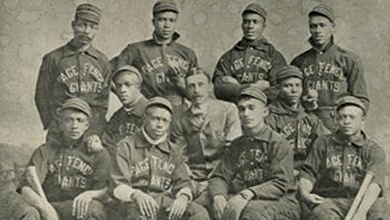
The brainchild of former players, Bud Fowler and Grant "Home Run" Johnson, the Page Fence Giants were a tour de force. In 1897, they had an unbelievable 82-game win streak. Most noteworthy was their ability to draw relatively large crowds with their stunts and gimmicks and, consequently, compensate their players well.10
-
1897-1907
Formation of the Cuban X Giants
This was the dominant team in the late 1890s and featured former players of the Cuban Giants. The team had an incredible pitcher, named Rube Foster, who led them to victory in the 1903 Colored World Championship. The Cuban X Giants were the first team all-Black team to play in Cuba and the first all-Black team to defeat a white major league team. In 1906, they were a founding member of the National Association of Colored Baseball Clubs of the United States and Cuba. They helped pioneer the way for Black players to play internationally, where they were often treated better than at home.11
Notable players included- John Henry "Pop" Lloyd (HOF)
- Dan McClellan
- Bobby Winston
- Harry Buckner
- Grant "Home Run" Johnson
-
1906-1931
Formation of the St. Louis Giants later renamed to St. Louis Stars
This team was created by Black banker, Charles A. Mills, and won the St. Louis City League Championships back-to-back in 1912 and 1913. In 1921, the team was sold to Dick Kent and Dr. Sam Sheppard and renamed the St. Louis Stars. The Stars played in one of the few places specifically for Black baseball clubs, Stars Park.12
Notable players included- Ben Taylor (HOF)
- Joe Hewitt
- Bill Gatewood
- Oscar Charleston (HOF)
- Candy Jim Taylor
- Cool Papa Bell (HOF)
- Mule Suttles (HOF)
- Willie Wells (HOF)
-
1907-1910
Formation of National Association of Colored Baseball Clubs of the United States and Cuba
Known also as the International League of Colored Baseball Clubs of American and Cuba (ILBCAC), this was a precursor to the Negro Leagues and, to some, considered the first Negro League. Their objective was to prevent players from switching teams often, but that failed.13
-
1911-1953
Formation of Chicago American Giants
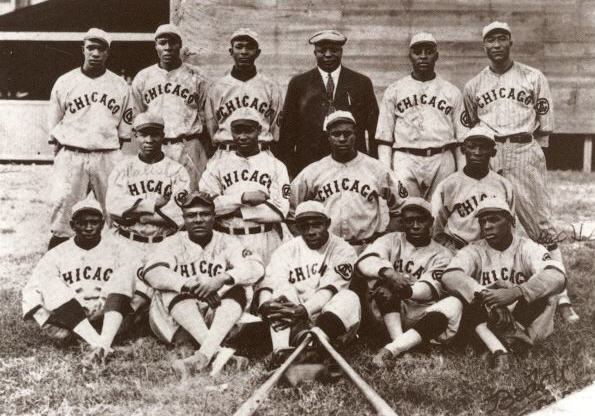
This team was a branch from the Chicago Unions, a dominant Black team in the 1880s. In 1901, former player, Frank Leland, merged this team with the Columbia Giants, creating the Chicago Union Giants. In 1905, he renamed it to the Leland Giants, becoming one of the top baseball owners in the Midwest. He recruited Rube Foster as the team's manager, but later disputes would see him forced out of the team. Foster assumed control of the Leland Giants and soon the team became the Chicago American Giants and rose to the top of Black baseball. They were one of the founding teams in the Negro National League (NNL I).14
Notable players included:- Frank Wickware
- Bruce Petway
- Leroy Grant
- Bingo DeMoss
- Cannonball Dick Redding
- Dave Malarcher